

Biotinidase Deficiency
What is a single gene disorder?
- Genes carry the information that determines the formation of proteins and traits in the body. Genetic disorders that can be caused by a change in one gene are known as single gene disorders.
- Change in BTDgene leads to a condition known as biotinidase deficiency.
What is biotinidase deficiency (BTD)?
Biotinidase is an enzyme which is found in kidney and liver. It is involved in the processing of a vitamin known as ‘biotin’. Biotin helps body convert food into energy and plays many other important roles in normal body functioning. Deficiency of biotinidase enzyme leads to disrupted recycling of biotin causing adverse effects on an individual’s health.
What are the symptoms of biotinidase deficiency?
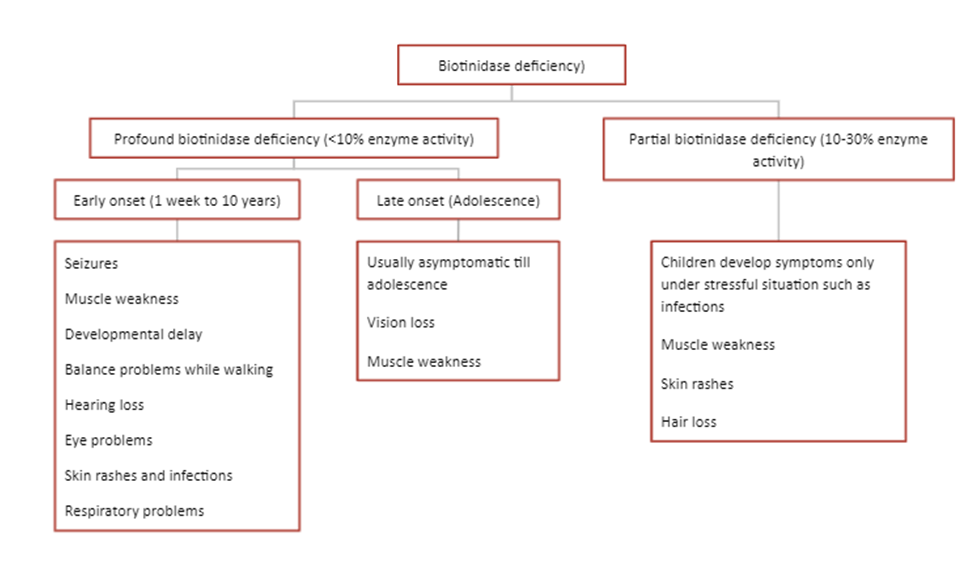
How to diagnose biotinidase deficiency?
- For asymptomatic individuals: Newborn screening can be performed as soon as the baby is born.
- For symptomatic individuals:
- In case of above-mentioned symptoms, enzyme assay can be performed tomeasure the level of biotinidase enzyme.
- Genetic testing can be performed to confirm the diagnosis.
Management
- Early diagnosis of the condition results in almost complete cure of children with biotinidase deficiency.
- Once the condition is recognized in the child, administration of biotin – or combination of multivitamincontaining biotin – can rapidly resolve and improve many of the clinical symptoms within hours to days.
- In case the child is symptomatic, treatment should be started at the earliest. Some features such as eye and ear problems and developmental delay may not be reversible. Symptomatic management is possible.
- All symptomatic children with biotinidase deficiency have improved after treatment with 5-10 mg oral biotin per day.
- Biotin therapy is for lifelong.
- A protein restricted diet is not necessary.
- Appropriate consultation with your doctor is required to administer the doses of biotin and to know the form in which it can be consumed.
- AVOID: Consumption of raw eggs should be avoided. Thoroughly cooked eggs can be consumed.
Surveillance
For all children with biotinidase deficiency:
- Yearly ophthalmologic examination and auditory testing for individuals with profound deficiency and every two years for those with partial deficiency
- Regularly scheduled appointments with primary care physicians for development monitoring or as needed
- Yearly evaluation by a clinical geneticist or metabolic specialist for individuals with profound deficiency and every two years for those with partial deficiency
- Physical examination for neurological findings
Genetic counselling
- There is 25% chance for this condition to recur in every subsequent pregnancy of mother.
- Prenatal testing by chorionic villus sampling can be performed at 11-13 weeks of gestation.
- A woman who is carrying a baby with biotinidase deficiency or is at risk of having a baby with biotinidase deficiency is consideration of biotin supplementation of the mother. An optimal prenatal dose has not been determined.
- Carriers of this condition are asymptomatic.
- A newborn with an older sib with biotinidase deficiency should be treated at birth with biotin pending results of the definitive biotinidase enzyme activity assay and/or molecular genetic testing.